
Editorial Research Index
Institutional briefings & primary regulatory analysis
Financial analysis and briefings published by London Firm Ledger.
20 matching briefings
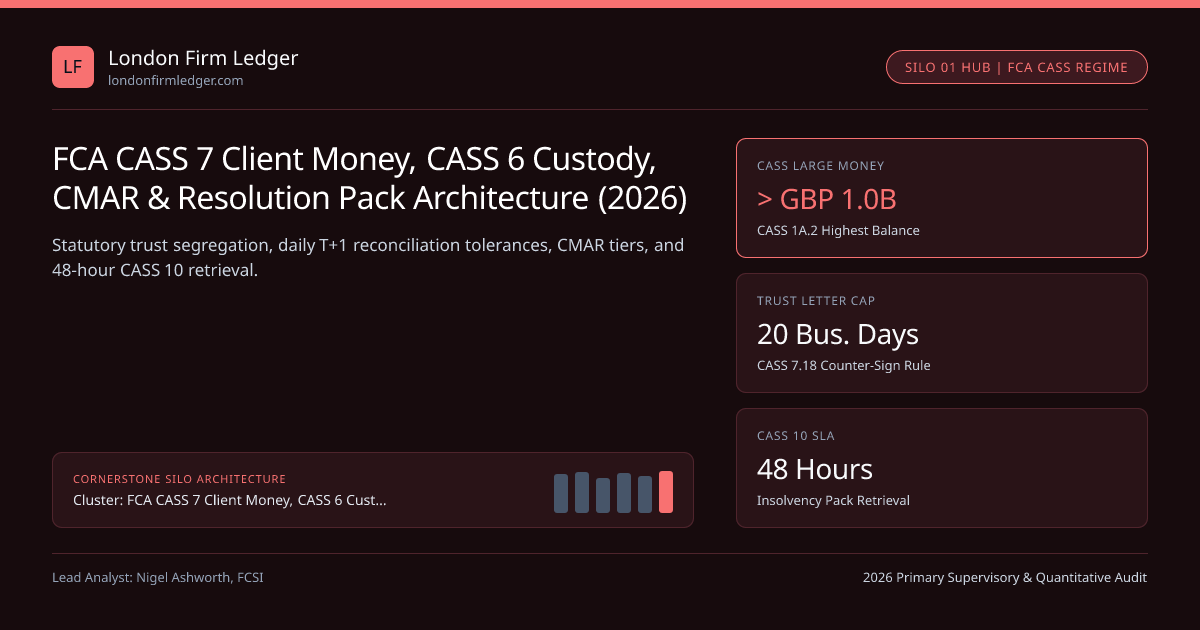
FCA CASS 7 Client Money, CASS 6 Custody, CMAR & Resolution Pack Architecture (2026)
UK FCA authorised investment firms holding over GBP 1 billion in client money or GBP 100 billion in custody assets face CASS Large supervision, daily T+1 reconciliations, 20-business-day CASS 7.18 trust letters, and 48-hour CASS 10 insolvency retrieval tests.
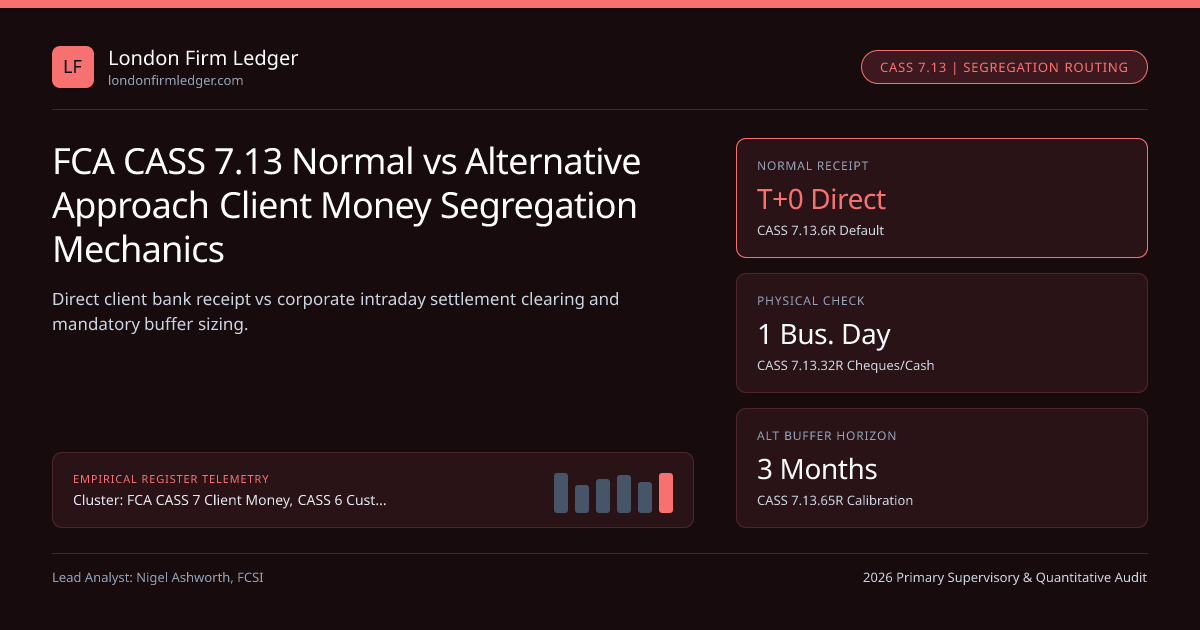
FCA CASS 7.13 Normal vs Alternative Approach Client Money Segregation Mechanics
Under FCA CASS 7.13, UK investment firms must segregate client cash directly upon receipt via the Normal Approach unless an external auditor certifies Alternative Approach eligibility backed by a 3-month rolling mandatory prudent buffer.
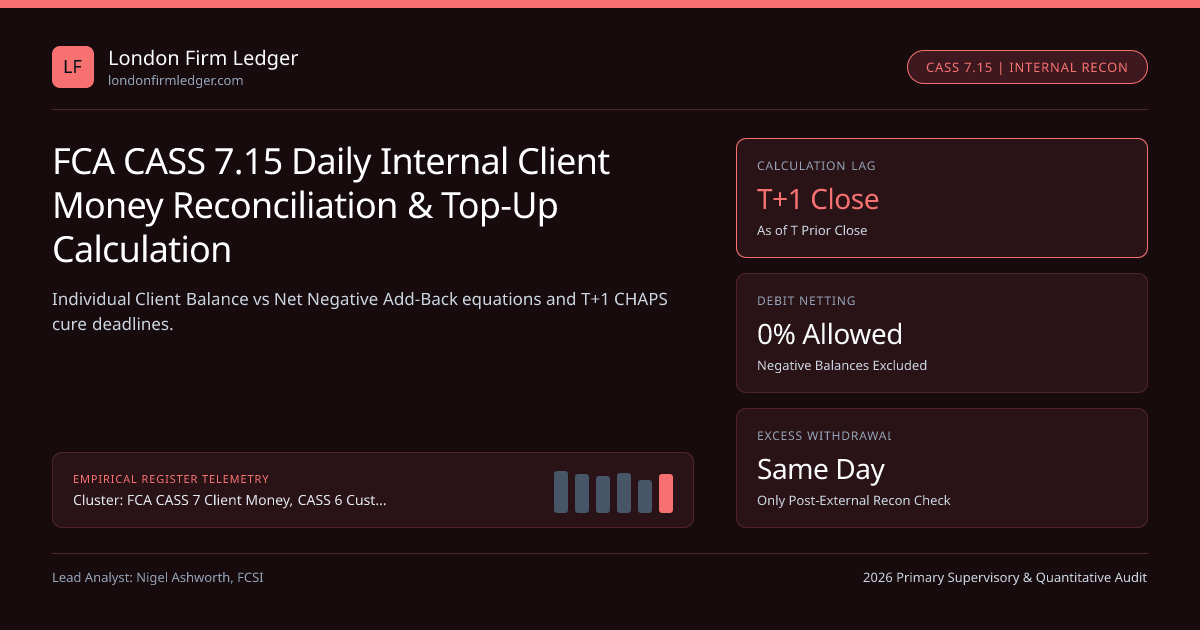
FCA CASS 7.15 Daily Internal Client Money Reconciliation & Top-Up Calculation
FCA CASS 7.15 mandates business-day internal client money reconciliations comparing segregated ledger resources against gross client entitlements, prohibiting negative balance netting and requiring same-day corporate cash top-ups.
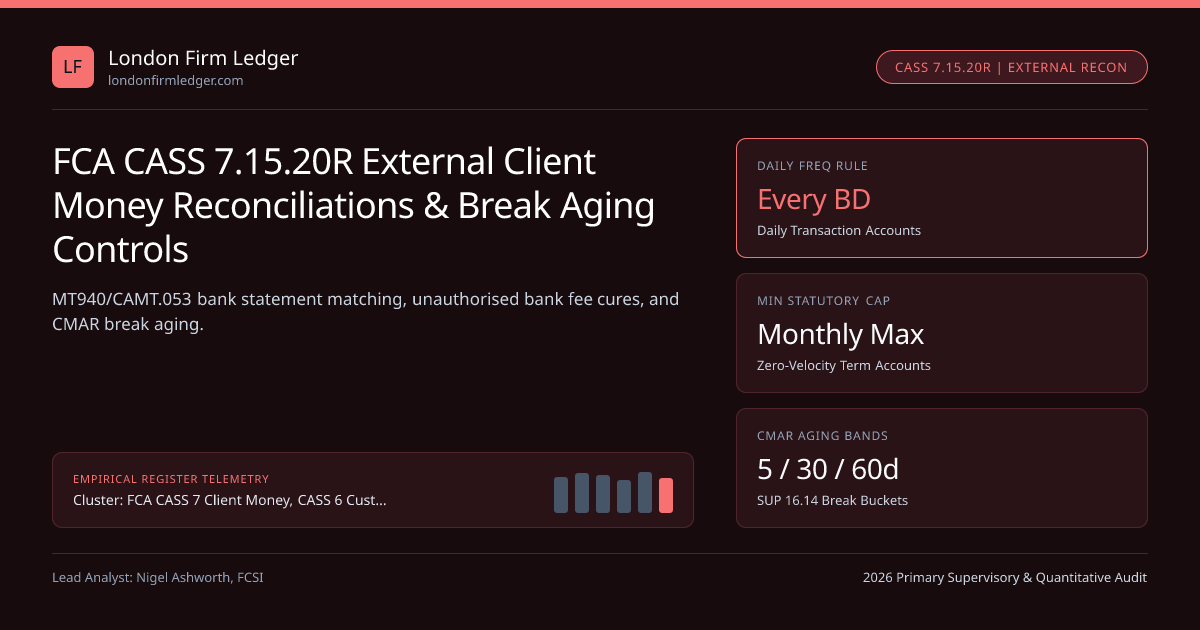
FCA CASS 7.15.20R External Client Money Reconciliations & Break Aging Controls
Under FCA CASS 7.15.20R, UK investment firms must reconcile internal client cashbooks against external bank and CCP statements at least monthly—and daily for high-frequency cash accounts—escalating aged breaks via CMAR.
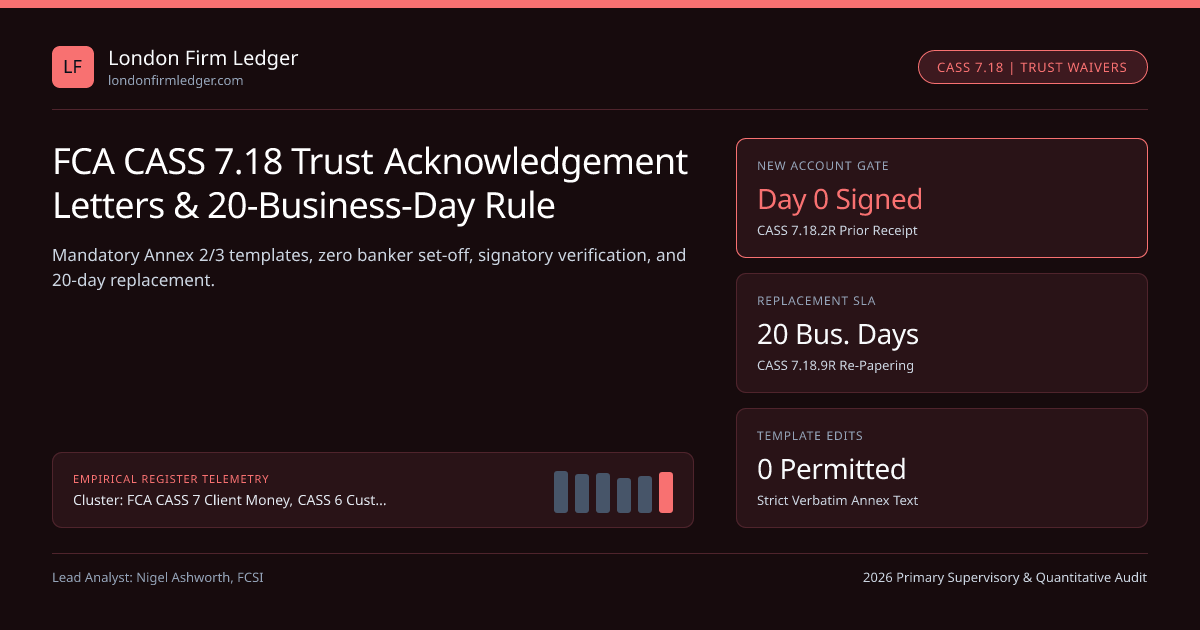
FCA CASS 7.18 Trust Acknowledgement Letters & 20-Business-Day Rule
FCA CASS 7.18 prohibits placing new client money into an unacknowledged bank account and requires existing accounts undergoing re-papering to secure countersigned FCA template letters within 20 business days.
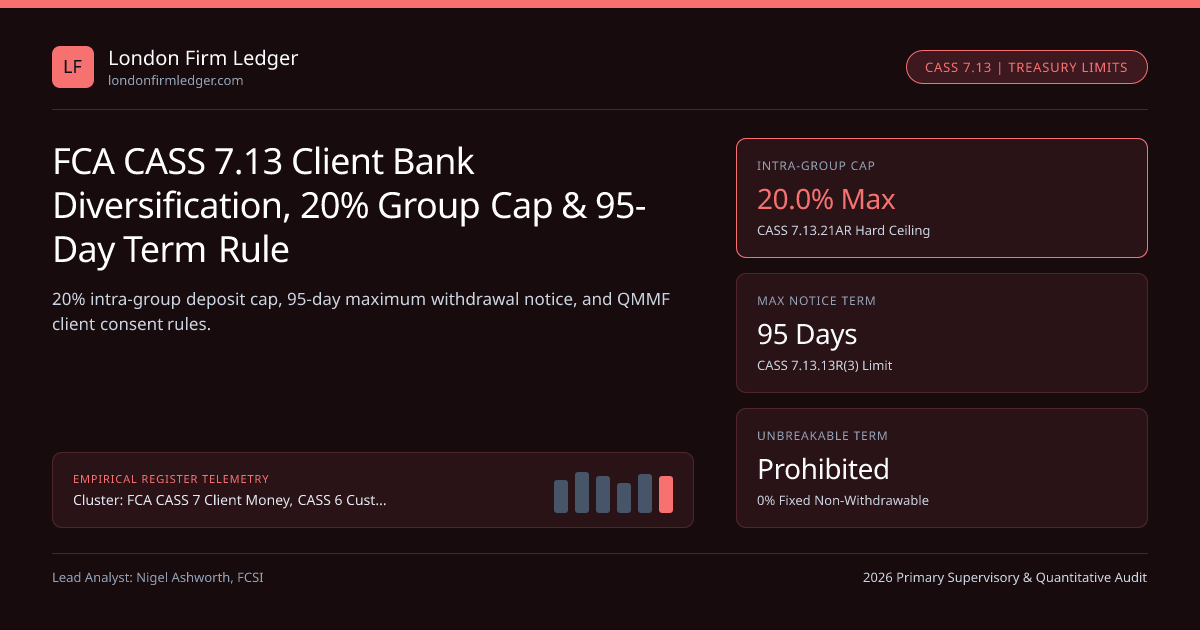
FCA CASS 7.13 Client Bank Diversification, 20% Group Cap & 95-Day Term Rule
FCA CASS 7.13 caps intra-group bank placements of client money at 20% of total segregated funds, bans unbreakable fixed-term deposits, restricts notice accounts to 95 days, and requires documented bank credit due diligence.
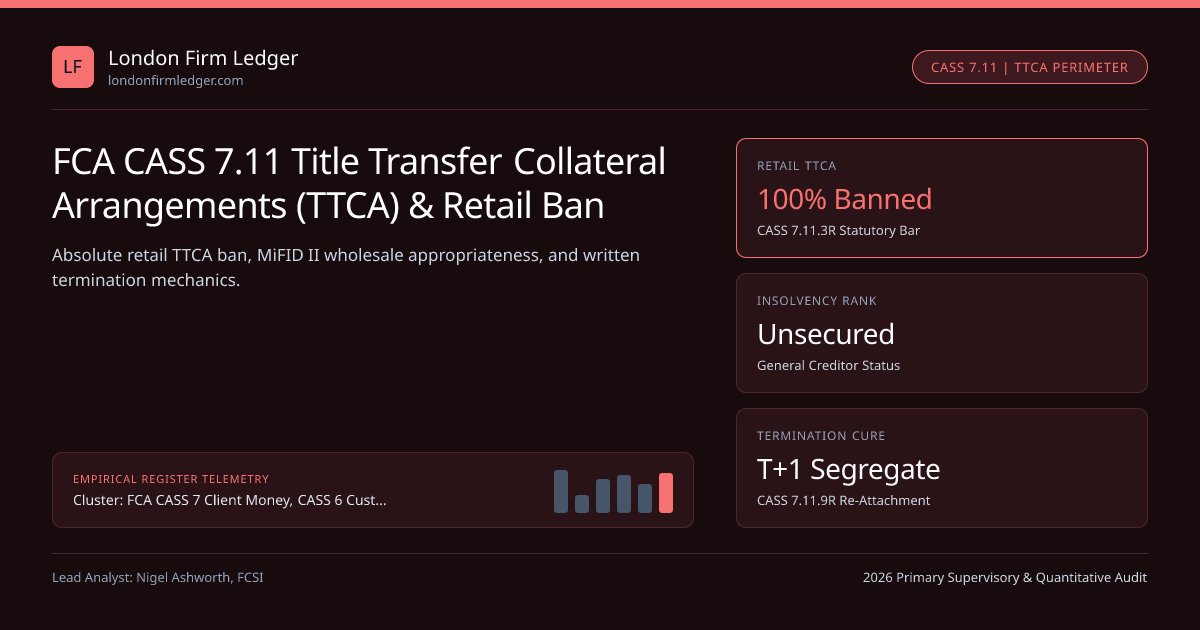
FCA CASS 7.11 Title Transfer Collateral Arrangements (TTCA) & Retail Ban
FCA CASS 7.11.3R imposes a blanket prohibition on Title Transfer Collateral Arrangements with retail clients and restricts wholesale TTCAs via appropriateness checks, over-collateralisation caps, and termination conversion rules.
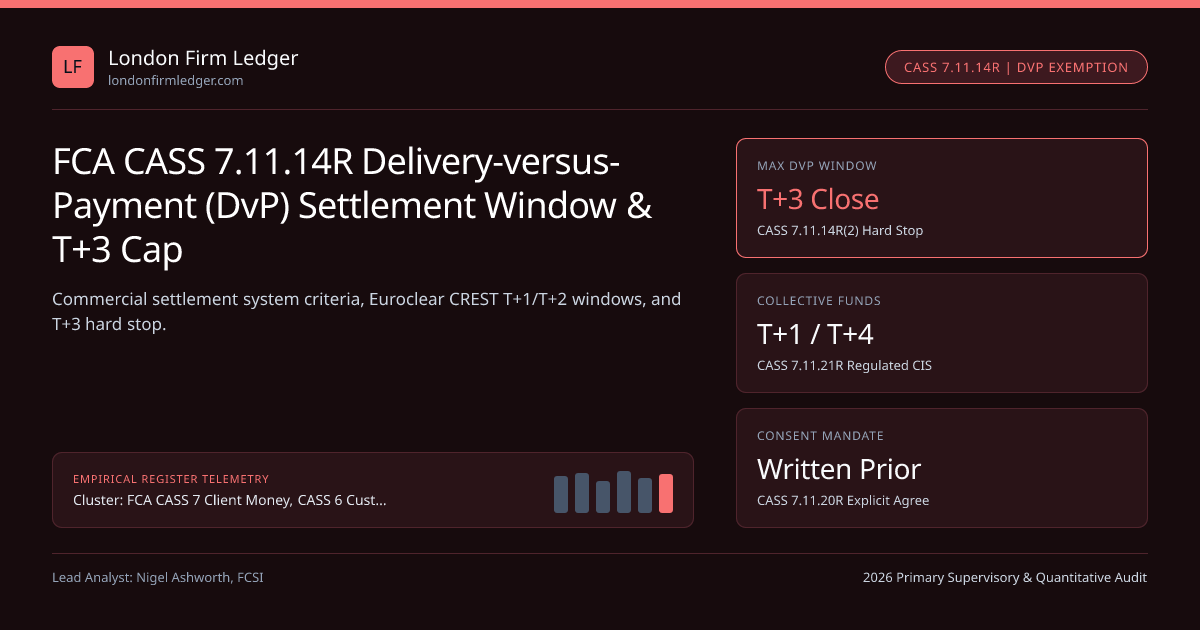
FCA CASS 7.11.14R Delivery-versus-Payment (DvP) Settlement Window & T+3 Cap
FCA CASS 7.11.14R temporarily exempts client cash and custody stock inside commercial DvP settlement systems for at most three business days (T+3), compelling immediate client money segregation on settlement fails.
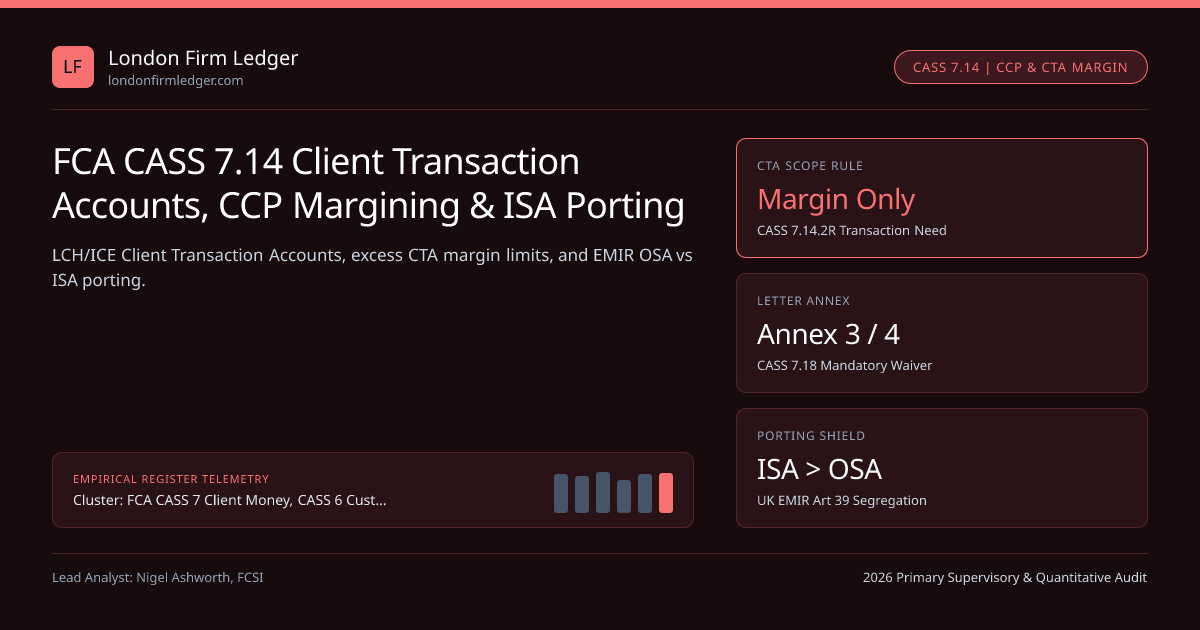
FCA CASS 7.14 Client Transaction Accounts, CCP Margining & ISA Porting
Under FCA CASS 7.14, client money posted to exchanges, clearing houses, or intermediate brokers must sit inside acknowledged Client Transaction Accounts limited strictly to required margin, distinguishing omnibus OSA from individual ISA porting.
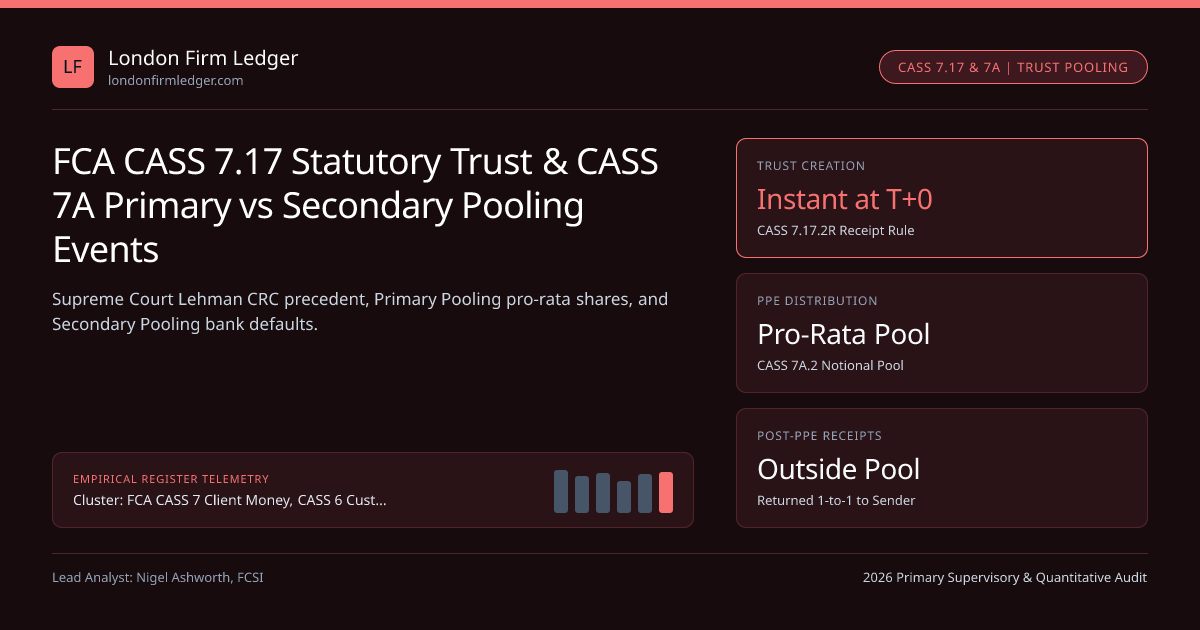
FCA CASS 7.17 Statutory Trust & CASS 7A Primary vs Secondary Pooling Events
Under FCA CASS 7.17 and CASS 7A, investment firm failure triggers a Primary Pooling Event distributing client cash pro rata across the notional pool, while bank failure triggers a Secondary Pooling Event.
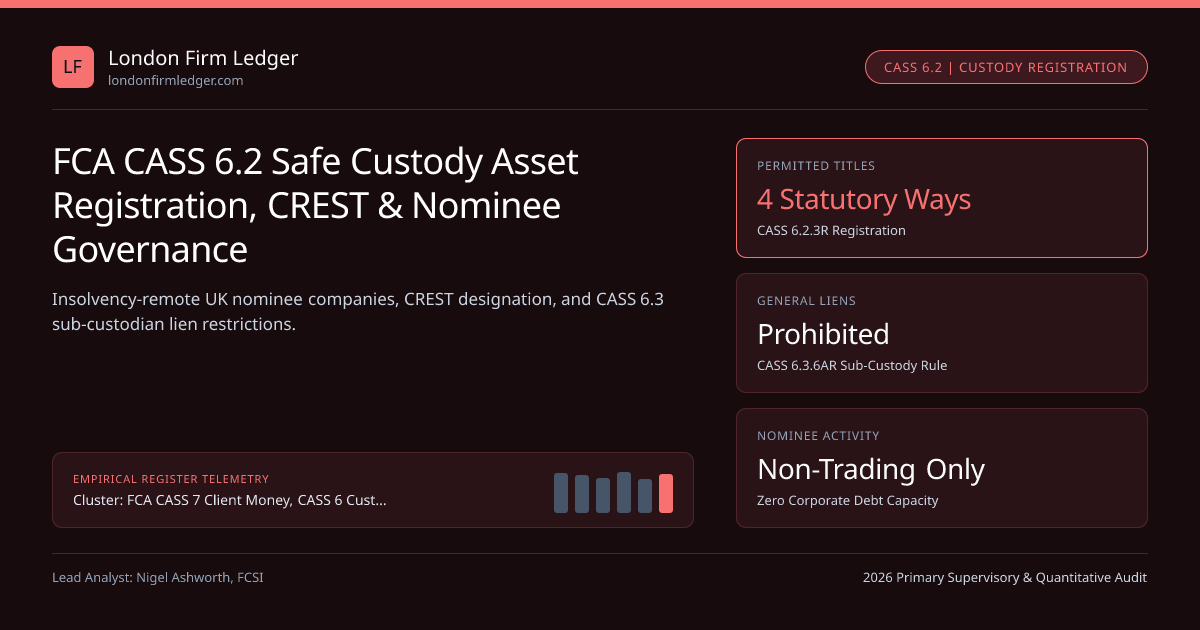
FCA CASS 6.2 Safe Custody Asset Registration, CREST & Nominee Governance
FCA CASS 6.2 mandates registering safe custody investments in either the client name or an insolvency-remote nominee company, outlawing general sub-custodian liens and restricting omnibus title registration outside the UK.
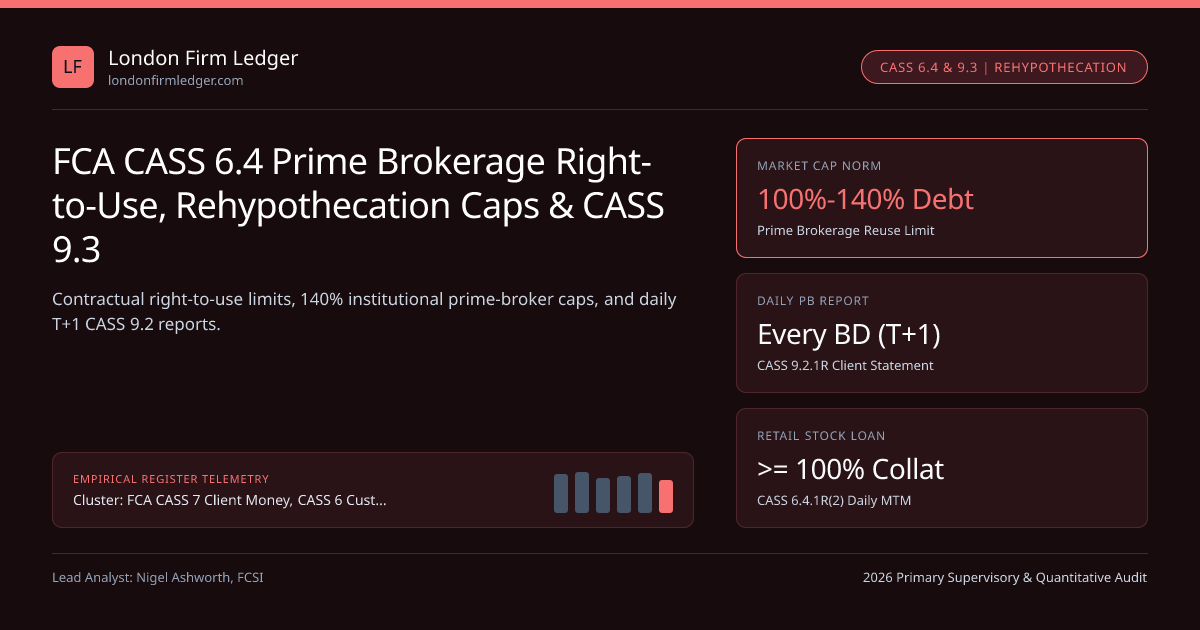
FCA CASS 6.4 Prime Brokerage Right-to-Use, Rehypothecation Caps & CASS 9.3
FCA CASS 6.4 and CASS 9.3 govern securities rehypothecation and stock lending across City prime brokers, requiring prior written consent, 100%+ daily collateralisation for retail securities lending, and T+1 CASS 9.2 reporting.
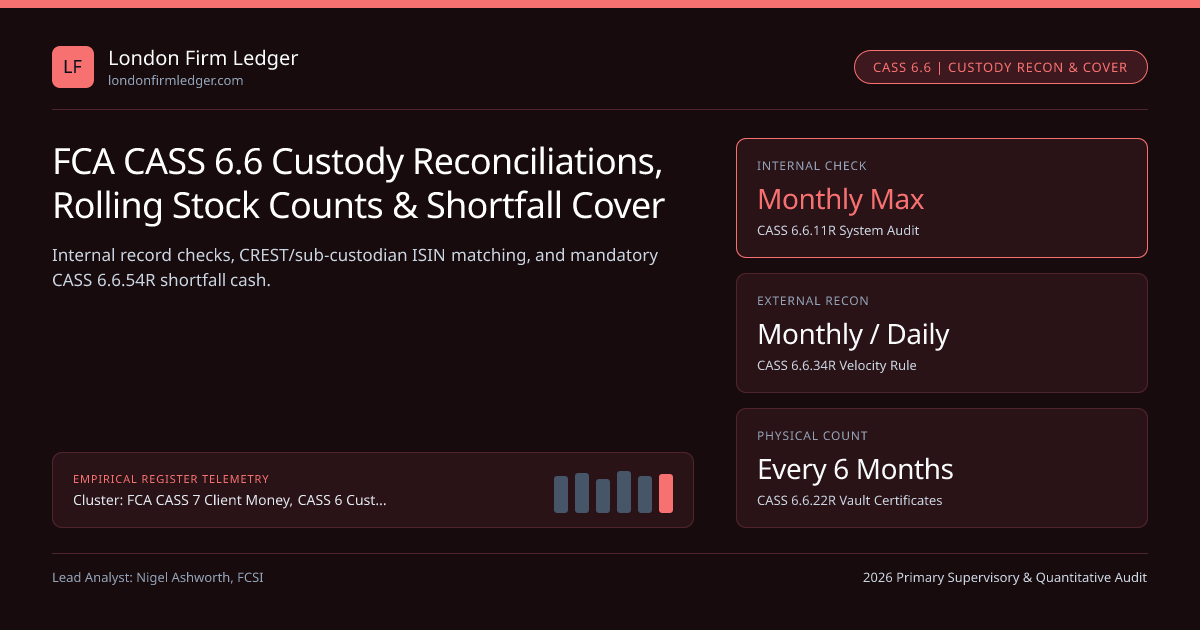
FCA CASS 6.6 Custody Reconciliations, Rolling Stock Counts & Shortfall Cover
Under FCA CASS 6.6, UK custody firms must run monthly internal record checks and external CSD reconciliations, investigate stock breaks immediately, and segregate firm cash or stock under CASS 6.6.54R for unresolved shortfalls.
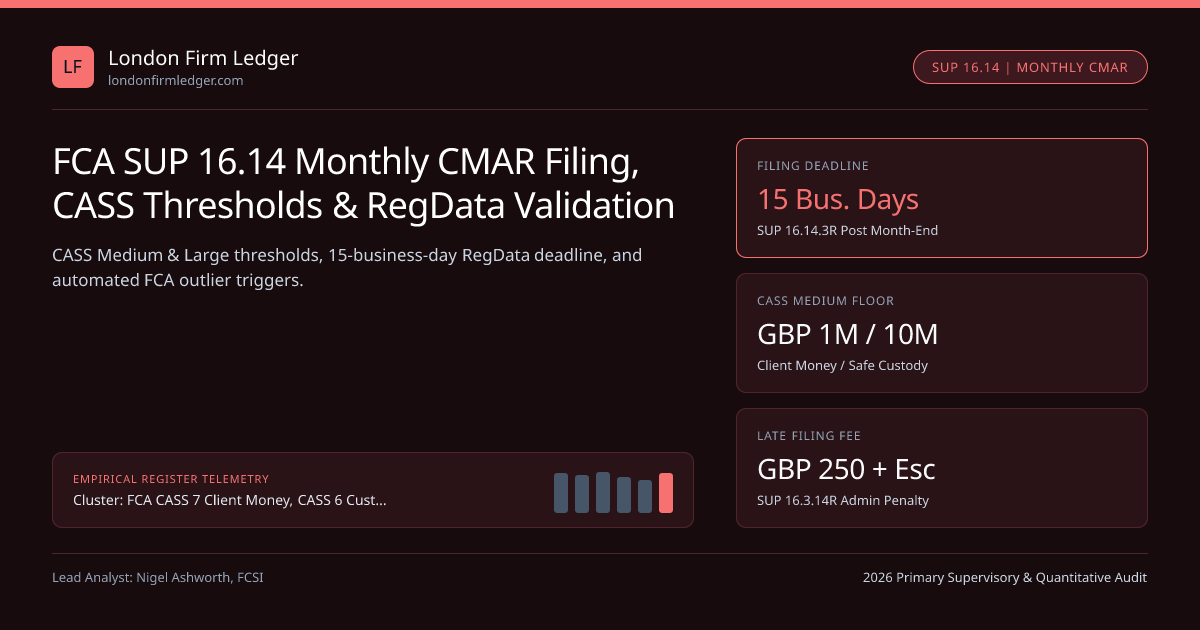
FCA SUP 16.14 Monthly CMAR Filing, CASS Thresholds & RegData Validation
Every CASS Medium and CASS Large firm regulated by the FCA must file a monthly Client Money and Asset Return (CMAR) via RegData within 15 business days of month-end under SUP 16.14.
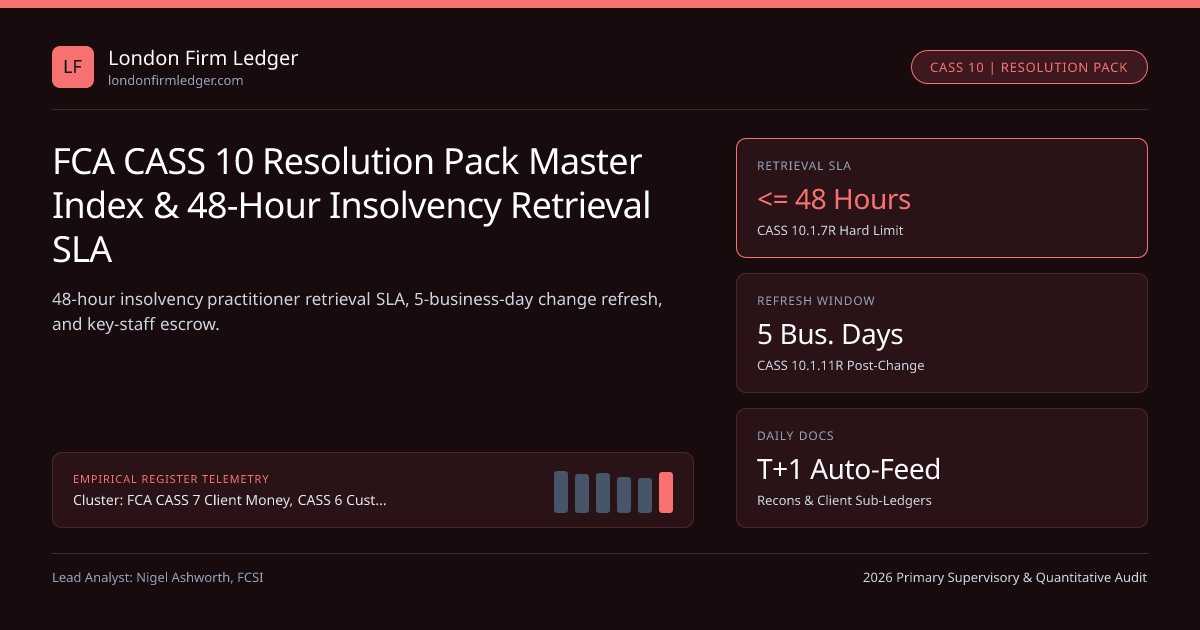
FCA CASS 10 Resolution Pack Master Index & 48-Hour Insolvency Retrieval SLA
FCA CASS 10 mandates that every client-asset investment firm maintain a live CASS Resolution Pack retrievable in full within 48 hours of insolvency appointment and refreshed within 5 business days of material changes.
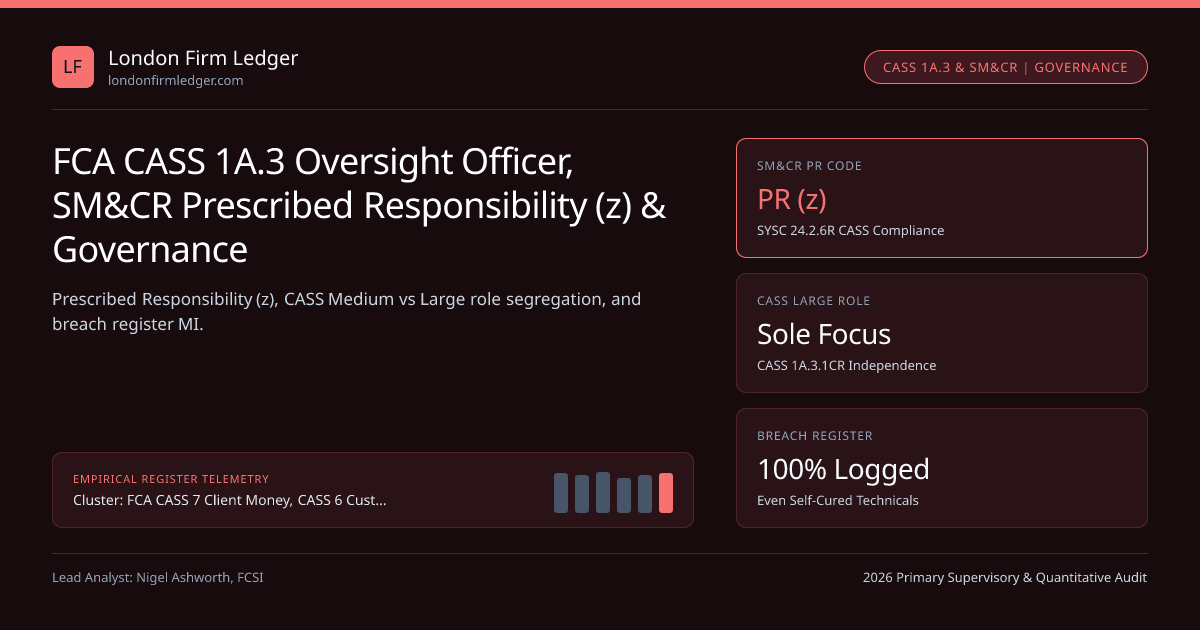
FCA CASS 1A.3 Oversight Officer, SM&CR Prescribed Responsibility (z) & Governance
Under FCA CASS 1A.3 and SYSC 24.2, CASS Medium and CASS Large firms must allocate personal senior manager accountability via Prescribed Responsibility (z), separating CASS operational oversight from commercial revenue roles.
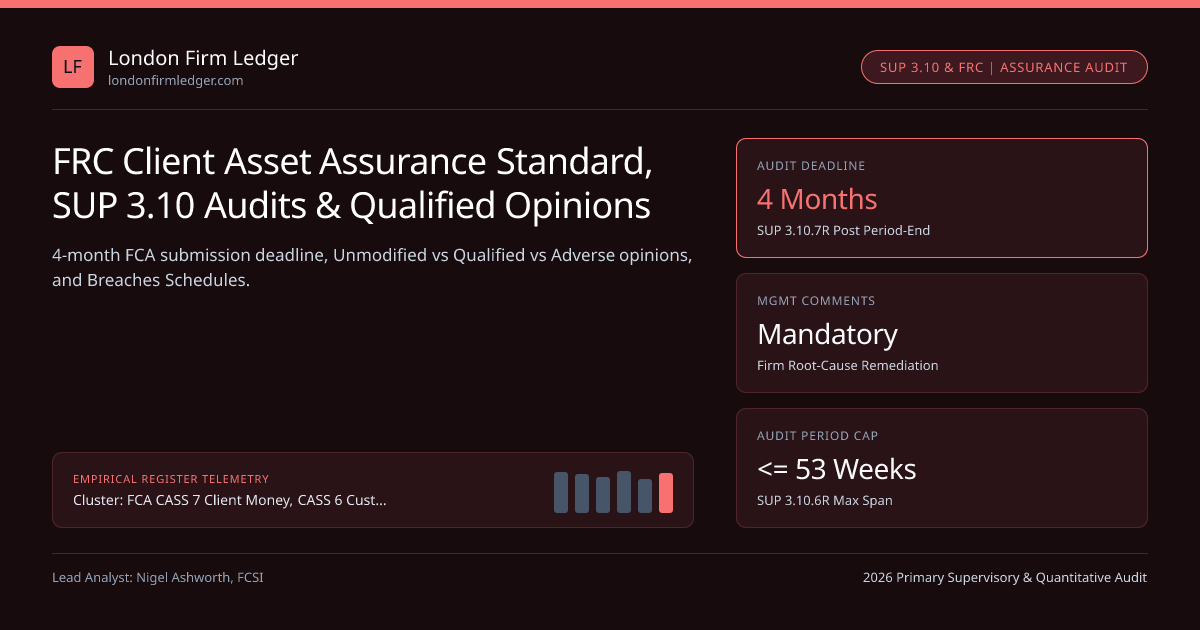
FRC Client Asset Assurance Standard, SUP 3.10 Audits & Qualified Opinions
Under FCA SUP 3.10 and the FRC Client Asset Assurance Standard, external auditors must deliver annual Client Assets Reports to the FCA within four months of period-end, listing every rule breach in a formal Breaches Schedule.
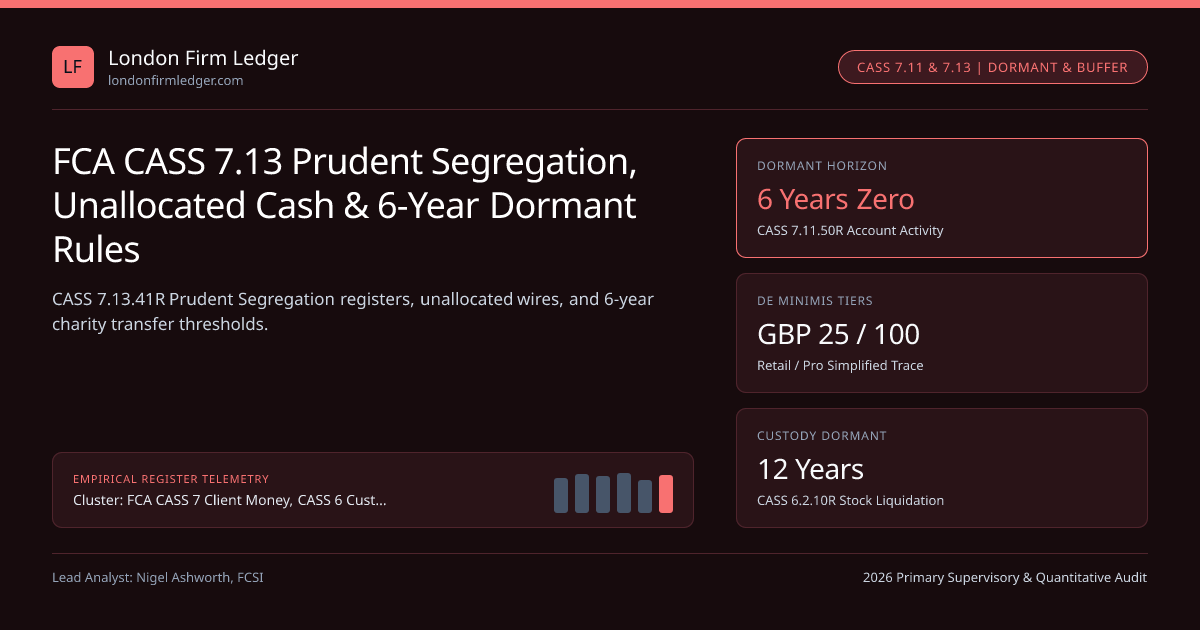
FCA CASS 7.13 Prudent Segregation, Unallocated Cash & 6-Year Dormant Rules
FCA CASS 7 governs unallocated client wires, strictly recorded CASS 7.13.41R prudent over-segregation buffers, and the CASS 7.11.50R 6-year dormant client money release mechanism (GBP 25 retail / GBP 100 professional de minimis).
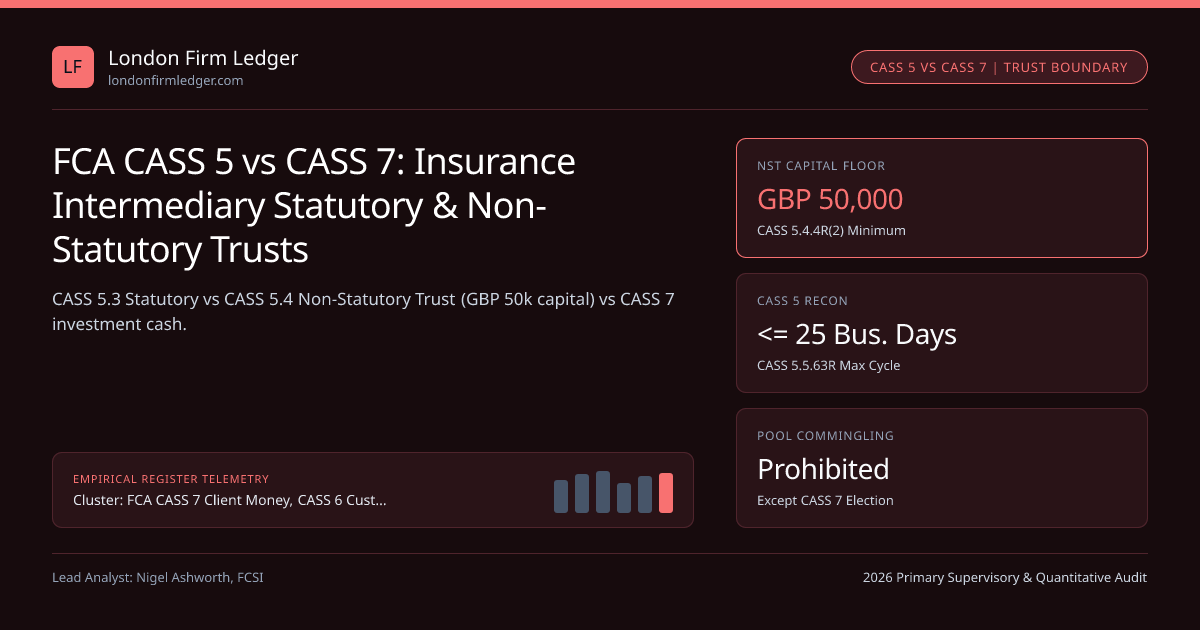
FCA CASS 5 vs CASS 7: Insurance Intermediary Statutory & Non-Statutory Trusts
Dual-permission UK brokers must strictly segregate FCA CASS 5 insurance distribution client money (Statutory Trust, GBP 50,000 Non-Statutory Trust deed, and insurer Risk Transfer) from CASS 7 investment statutory trusts.
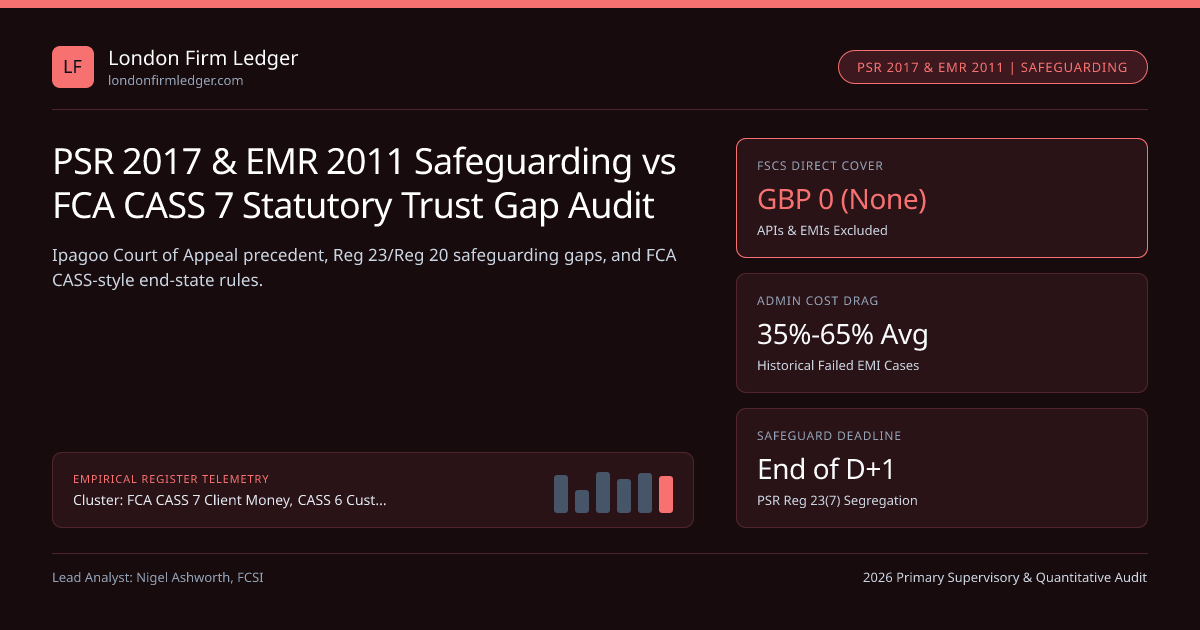
PSR 2017 & EMR 2011 Safeguarding vs FCA CASS 7 Statutory Trust Gap Audit
UK Authorised Payment Institutions and Electronic Money Institutions safeguard relevant funds under PSR 2017 Reg 23 and EMR 2011 Reg 20—lacking FSCS protection and facing FCA CASS-style safeguarding reforms after court insolvencies.